
If you are looking for typical things from Malaga to really get a feel for the city, here is a clear and very practical guide: flavours that are repeated on Malaga's tables, customs that mark the calendar, details that are worth taking with you and cultural plans that fit into any trip, even if you only come for a weekend.
What you should know about the typical things to do in Malaga and why it changes the way you travel.
Typical is not just about eating: flavours, festivals, streets and way of life in the city.
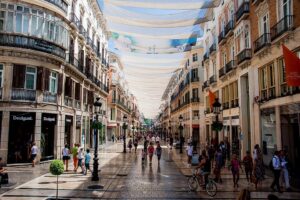
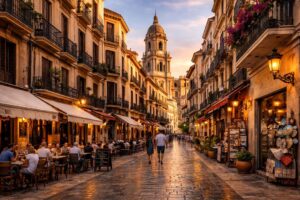
When someone is looking for typical things from MalagaBut what really makes Malaga stay with you is the mix: what you taste, what you hear, what you celebrate and how the streets are occupied. Here the "typical" is as much a dish as an everyday scene: the stroll through the centre in the evening, the terraces that fill up without hurry, the market as a living place (not as an attraction), and that way of moving around the city in which everything is understood by walking.
Seasonal factors also come into play: Malaga changes a lot depending on the month. There are weeks in which the centre is transformed by celebrations and traditions, and others in which the city lives more towards the sea, with the heat setting the pace. That's why this guide is not about making an endless list, but rather about choosing typical things from Malaga that fit in with your time and your way of travelling, without feeling like you are rushing from one point to another.
Authentic Malaga, no travel: check dates
Typical things to eat in malaga: dishes that define the city
From the sea to the table: espetos, boquerones (anchovies) and fritura malagueña (fried fish)
If there is one flavour that identifies Malaga, it is the sea. The espeto de sardinas is a very Malaga way of eating fish: sardines skewered on a rod and grilled with just enough salt and little else. It's not just "a dish"; it's a way of understanding the coast and the good weather, and it's usually best enjoyed as a plan in itself: a stroll, a breeze, and a leisurely meal.
The lemon anchovies are the other classic that comes up time and time again. They are usually served fried and with a touch of citrus, very tasty if you want something tasty but light in sensation. And if you come hungry or want to try "a little bit of everything", the malagueña frying is the perfect summary: a mix of small fish and squid, crispy, meant to be shared.
Cold and summery: ajoblanco, porra antequerana and ensalada malagueña (Malaga salad)
When the heat is on, Malaga has three cold dishes that act as a delicious "survival manual". The ajoblanco is a cold soup of almonds, bread, garlic and oil, smooth and refreshing, often accompanied by grapes or other sweet touches. It's ideal if you fancy something fresh without feeling like you're eating "just salad".
The antequera truncheon is denser: tomato, bread, oil and vegetables mashed until it's almost like a thick cream. It is usually topped with egg and ham (or tuna), and is perfect if you want to eat something typical and filling, but still fresh. And the Malaga salad plays with a very local contrast: potato and cod with orange and olives, a dish that is surprising if you don't know it and that, well done, is one of those that you remember when you return home.
Spoon dishes and dishes from home: gazpachuelo, cabbage from Malaga and pintarroja stew.
Malaga also has a cuisine for the home, for spoon dishes and for days when you feel like something comforting. The gazpachuelo is one of the most characteristic: a broth (often fish) to which potatoes are added and bound with a mild mayonnaise, creating a creamy and very special soup. It is one of those recipes that tell a story: humble, seafaring cuisine and a taste of home.
The Malaga cabbage is a hearty stew, with pulses, vegetables (such as cabbage) and meat; it's the kind of dish associated with family meals and cooler months. And if you want something with a personality of its own, the dogfish stew stands out for its character: a soup with pintarroja (a fish very common in local recipes) and a base with bread and almonds, usually with a touch of joy (spicy) that makes it unmistakable. They are typical things from Malaga less "touristy" and more authentic: when you try them, you understand another Malaga.
Very local snacks: campero and aubergines with cane honey
There are two snacks that function almost like "wild cards" in Malaga. The campero is the local sandwich par excellence: it's usually served in a mollete and combines very recognisable ingredients (chicken, cooked ham, cheese, lettuce, tomato, mayonnaise; sometimes egg). It's perfect when you want something quick, casual and very cityy, especially if you've been walking all day.
And then there are the aubergines with cane honeyFried aubergine (often in sticks or thin slices) with that sweet contrast that hooks you. It is a starter that appears on many menus and that sums up a very Andalusian idea: fried well done + a sweet touch that balances. If you are looking for typical things from Malaga that almost everyone likes, these two are usually a safe bet.
Flavours and traditions within walking distance: book your flat
Sweets and snacks: typical things from malaga with a taste of tradition
Pastries and classics to go with coffee
In Malaga, the snack is not an "extra": it is a break with an identity. If you want to get it right without thinking too much, there are sweets that appear again and again in confectioneries and on family tables.
- Crazy cakesThey are probably the most recognisable snack when you are looking for something very Malaga. They are usually small pieces of puff pastry filled with custard and finished with icing and a cherry. They work especially well mid-afternoonwhen you are in the mood for something sweet and "on a whim", and also as a shared dessert if you are trying several things.
- Wine donutsTypical when the cold weather and the festive season arrive, but easy to find throughout the year in many confectioners' shops. They are perfect to accompany a coffee because they are dry and aromaticThe kind that invites you to go slowly.
- Pestiños y buntingThese sweets are closely linked to Andalusian tradition (in Malaga they feel very much at home). They tend to make a strong appearance at times of celebration, and are a great addition to a "try a bit of everything" snack: one or two, and you're on your way.
- Bienmesabe (sweet version): if you prefer something with almonds as the main ingredient, this is a very typical option. It goes well after lunch or as a quieter snack, when you are looking for flavour but not too heavy.
If you want a simple criterion: CRAZY CAKE if you fancy something emblematic and sweet-toothed; donuts if you want something for coffee; pestiños/borrachuelos if you're looking for tradition; bienmesabe if you are a fan of almonds and the "usual" flavours.
Easy gift options that are often popular
For gift-giving, what works best is what stands up well to transport and does not require lengthy explanations.
- Assortment of doughnuts/beignets/borrachuelosis the classic gift because it is shared and is usually liked even by those who don't know Malaga. What's more, it is easy to buy in a box and take it with you as it is.
- Crazy cakes in a box (if you find them packaged): it is a very "Malaga" and visual gift, ideal if you want something that can be understood when you open it.
- Sultanas from MalagaIf you prefer a lighter gastronomic treat, sultanas are a very local and easy to carry option.
- Sweet wine from Malaga (a well-chosen bottle): this is the "most effective" gift if the person enjoys sweet wines. The key is to choose the style according to taste (I leave it below, without technicalities).
Experience the typical things of Malaga on foot: booking in Malaga centre
Drinks with identity: typical Malaga things to toast with
Sweet wines from Malaga: styles you will find and how to choose according to your taste
Malaga sweet wines are not all the same. To make the right choice, think about what kind of sweetness you fancy and in when you are going to take it:
- Aromatic and fresh sweetness (Muscatel profile)if you like wines with a floral bouquet, honey/citrus notes and a lighter feel, look for a sweet style Muscatel. They tend to be the easiest to start with and are often best enjoyed well chilled.
- More intense and full-bodied sweetness (raisined grapes or traditional styles)if you prefer a deeper sweetness, with a denser sensation and a very ripe grape character, sweets made from grapes will suit you. raisined or traditional styles with more power.
- Pajarete (traditional from Málaga)If you fancy a sweet wine with its own personality within Malaga, the Pajarete is a name worth remembering. It is a traditional style recognised in the denomination, designed for those who want a sweet with more structure.
How to decide in 10 seconds:
- "I want something easy and fragrant" → Muscatel (better cold).
- "I want something more serious, for slow after-dinner conversation" → sweeter sweet / raisined / traditional style.
- "I want a classic with a name of my own" → Pajarete.
Alternatives for those who prefer something lighter
If sweet wine is not your cup of tea, Malaga also has options with identity but lighter:
- Still wines of the province (D.O. Sierras de Málaga)The following wines: whites, rosés and reds complete the Malaga wine offer without going overboard on the sweetness. It is a good option if you want to toast with something local but more "table".
- Malagueña beer (Victoria)A very natural alternative if you're in strolling and terrace mode. It is a brand historically linked to Malaga and born in the city; it fits especially well as an aperitif or to accompany tapas without complications.
Traditions and folklore: typical things from malaga that do not live in a museum
Easter Week in Malaga: keys to understanding it as a visitor
Holy Week in Malaga is not only understood by "watching" a procession go by: it is a celebration. religious, social and cultural that occupies the city for days, with entire neighbourhoods devoted to their brotherhoods and a city centre that changes its rhythm. To understand it quickly, here are three ideas.
The first is the scalein Malaga are famous for the thrones (large-scale processional structures), which here are carried in a characteristic way, by men on the throne through the poles. This staging - music, lights, incense, full streets - is part of what makes the experience so different from a monumental visit.
The second is the Official TourThere are sections with chairs/stands and free sections. If you don't want to pay for a season ticket, no problem: the Agrupación itself has published that a relevant part of the route can be seen without a season ticketThis allows you to experience it with more freedom (and less of a "closed event" feeling).
The third is the how to look at it: the best approach is to choose one or two processions and see them in two moments (e.g. departure and return, or a broad point and a more intimate one), rather than trying to "do it all". This way it becomes an experience, not a list.
The Malaga Fair: day and night, and which plan suits you best?
The Malaga Fair is one of those Typical things to do in Malaga that are experienced in layers. The clearest way to understand it is to think of two scenarios.
On the one hand, there is the Day Fairwhich is usually concentrated in the centreWith a street atmosphere, music, people coming in and out of festive spaces and a perfect plan if you feel like "living Malaga" without staying up all night. If you're travelling as a couple, with your family or just want a comfortable plan, the daytime fair is the easiest option: you arrive, stroll around, soak up the atmosphere and combine it with your tourist route.
On the other hand, there is the Real (fairgrounds), where the fair takes on a more nocturnal tone: more spectacle, more music until late and a plan that suits you if you are looking for a long night out. If your trip is with friends or you fancy the most intense part of the fair, the Real is the natural place.
The key to choice is simple: centre = social and walkable fair; Real = night fair. And if you don't want to choose, do as many Malagueños do: a time during the day to "see it" and a night to "feel it"..
The verdiales: popular music from Malaga and how to recognise it
The verdiales are one of the typical things from Malaga more authentic because they belong to the living heritage: music and dance of peasant roots, with "pandas" (groups) that play and sing in celebration. To recognise them without knowing anything about technique, look for three signs.
The first is the soundThe first one is the first one: the violin usually carries the melody and the ensemble is supported by guitars, tambourine and cymbals, creating a very characteristic rhythm (festive, insistent, celebratory). The second is the aestheticsThe pandas are often very visibly decorated (especially with decorated hats) and a staging that does not look like a "concert", but rather like a "concert". community celebration. The third is that there are three styles linked to areas (Montes, Almogía and Comares), which explains why they do not sound exactly the same everywhere.
Moreover, the verdiales are not a curiosity: they are officially recognised as cultural heritage (and are protected as an Asset of Cultural Interest in Andalusia), which reinforces their value as an expression of the province's identity.
Fair or Easter? Stay in the centre: book
Symbols and everyday details: typical things from malaga that appear on the street
The biznaga: what it is, when it can be seen and why it is so typical of Málaga
The biznaga is one of the most Malaga-like images in existence, and the beauty of it is that it is not "a flower" in the strict sense of the word: it is a handmade composition made with jasmines placed one by one on a dry frame (the "nerdo", from the plant Ammi visnaga). This is why the biznaga smells of summer: it is associated with the warmer months and is traditionally sold in the street when the evening falls and the stroll begins.
If you are looking for typical things from malaga that don't require an entrance ticket or a timetable, the biznaga is perfect: you see it, smell it, understand it in seconds. And it also explains something important about the city: Malaga is not only visited; it is also breathe in.
Terrace and promenade customs: the city centre as a "living room" of the city
There is an everyday detail that many visitors remember about Malaga: the centre functions as a great strolling space, with people moving leisurely, sitting, chatting and walking again. It's not just "going out to eat"; it's the habit of being on the streetsquares, pedestrian streets, terraces that fill up at certain times of the day and the habit of prolonging the moment.
As a traveller, this changes the way you plan: Malaga is best enjoyed if you don't try to fit everything in "on the run". Leave some time for the aimless walk (even if it is short) and you will see that many typical things from malaga appear on their own: a biznaga, a panda at a party, a special atmosphere on a special date, or simply the city coming to life.
FAQs in text (for normal editor)
What typical things in Malaga should I not miss on a first visit?
A balanced combination usually includes a stroll through the centre, sampling Malaga cuisine (sea and traditional cold dishes), seeing a local symbol such as the biznaga in season and fitting in at least one cultural plan.
Which typical dishes are the most representative of Malaga?
Among the best known are the espetos, boquerones, fritura malagueña, ajoblanco, porra antequerana, ensalada malagueña, gazpachuelo and el campero.
What typical things from Malaga are good to give as a gift?
It usually works very well to bring something gastronomic (local sweets, market produce, sweet wines if they suit you) or a small, easy-to-carry handicraft item.
When are the typical traditions best experienced in Malaga?
It depends on your trip: Semana Santa and Feria mark two key moments, and in summer there are some of its own symbols such as the biznaga and the nightlife in the centre.
Can I see typical things in Malaga if I only have one day?
Yes, if you prioritise the historic centre, a couple of cultural stops and a typical gastronomic block, you can get a very complete experience in one day.
What do I do if it rains and I still want to see typical things from Malaga?
Make the most of museums, markets and cultural venues, and save the outdoor walk for moments of respite: this way you don't "waste" the day.
Your route of typical things of malaga starts here: reservation
You may also be interested in:
What to see in Malaga in one day
Roman Theatre of Malaga: history, visit and keys to understanding it today
Free museums in Malaga: discover art, history and culture without spending money
The Malaga Biznaga: The Flower that Perfumes the City
Gibralfaro Viewpoint: The Best Views of the City
Best beaches in Malaga: guide by area, ambience and type of trip