
If you are wondering what to see in Malaga in one dayThe answer begins with its light: that unique clarity that bathes the Mediterranean and turns every corner of the historic centre into a living postcard. Malaga is a city that breathes history - from the Phoenicians and Romans to the Andalusian legacy - but also modernity, art and outdoor life. Its sea, its climate and its people create a warm and vibrant atmosphere that conquers those who visit it, even if they only have a few hours to explore it.
Spending a single day in Malaga may seem a challenge, but its compact size and urban charm allow you to enjoy it without rushing. In this guide we'll show you how to discover its most emblematic monuments, its local flavours and its historic corners in a tour designed to experience the essence of the city in twenty-four hours.
And if you are planning your trip to Malaga, discover our flats in the heart of the city with Málaga DreamsThe perfect place to rest after an intense day of discoveries and feel at home in the centre of Malaga.
Historical and cultural context of Malaga
Origins: from Phoenicians to Christians
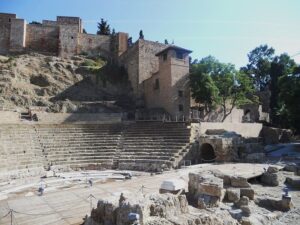
Malaga's history goes back almost three millennia. Founded by the Phoenicians in the 8th century BC. under the name of Malakawas a key trading port in the Mediterranean. The Romans consolidated their urban development, leaving as their legacy the Roman Theatrestill visible at the foot of the Alcazaba. With the arrival of the Muslims in the 711 AD.The city experienced its period of greatest splendour as a port of the Caliphate of Córdoba. It was then that the Alcazaba and the Gibralfaro Castleemblems of Andalusian art. At 1487After the Christian conquest, Malaga became part of the Crown of Castile and construction began on the Cathedral of the Incarnationknown as La Manquita.
From merchant port to cultural city
Between the 17th and 19th centuries, Malaga flourished as a port exporting wine, sultanas and oiland was modernised with the industrial drive of the family Larios. That growth left its mark on its architecture, especially on the Paseo del Parque and the neoclassical buildings in the centre. In the 20th century, the city was transformed into a cultural reference point thanks to Pablo Picassoits most universal child, and to institutions such as the Picasso Museum Malagathe Carmen Thyssen Museum or the Pompidou Centre Malaga. Today it combines its historical heritage with a vibrant modern life, a renovated port and a first class cultural offer.
A perfect city to visit in a day
Malaga is ideal for a short visit because of its compact sizeits pedestrianised historic centre and its privileged climatewith more than 300 days of sunshine a year. In just a few hours you can visit its main attractions - the Cathedral, the Alcazaba, the Roman Theatre, the Atarazanas Market and Calle Larios - enjoy its Mediterranean gastronomy and stroll along the seafront. Its warm and hospitable atmosphere turns every corner into an authentic experience, perfect for those who wish to discover in a single day the essence of this bright and welcoming city in the south of Andalusia.
Stay at Malaga Dreams and feel at home.
Suggested route: what to see in Malaga in one day
1. Walk through the historic centre: from Plaza de la Constitución to Calle Larios.
The heart of Malaga beats between the Constitution Square and the Marqués de Larios Streettwo spaces that sum up the essence of the city: open, luminous and profoundly Mediterranean. This tour is the ideal starting point for discovering the city. what to see in Malaga in one dayIt concentrates some of the most emblematic and lively local spots.
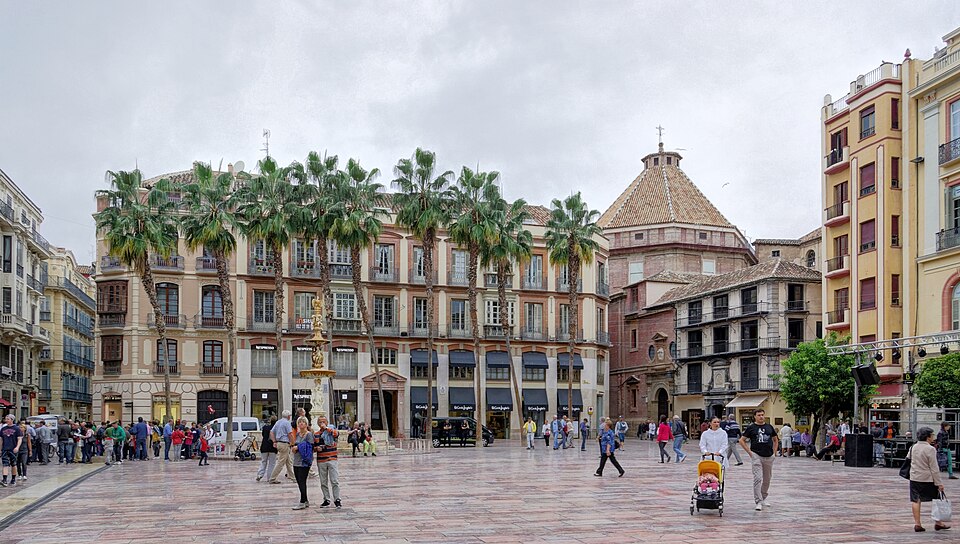
The Constitution Square has been the nerve centre of the city since the Middle Ages. In times gone by it housed the Cabildo and was the setting for celebrations, markets and public events. It is an essential stop to understand the urban history of Malaga: the old Muslim walls used to start from here and the main streets of the old quarter were articulated. Today, the square is a large and elegant space, surrounded by historic buildings such as the Consulate House or the Café Centralfamous for its peculiar system of ordering coffee "a la malagueña" - with expressions such as "a la malagueña", "a la malagueña", "a la malagueña" or "a la malagueña". shadow, half o cloudThe coffee and milk quantities are shown on the display.
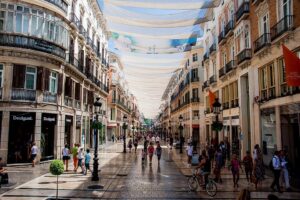
From the square, the walk continues along the Marqués de Larios StreetThe city's most famous and most photographed thoroughfare. Inaugurated in 1891, it was designed with a Parisian inspiration, following the model of the grand boulevards of the 19th century. Its role as a symbol of modern Malaga stands out: a pedestrian street, elegant and lively, with perfectly aligned neoclassical façades reflecting the mercantile prosperity of the time.
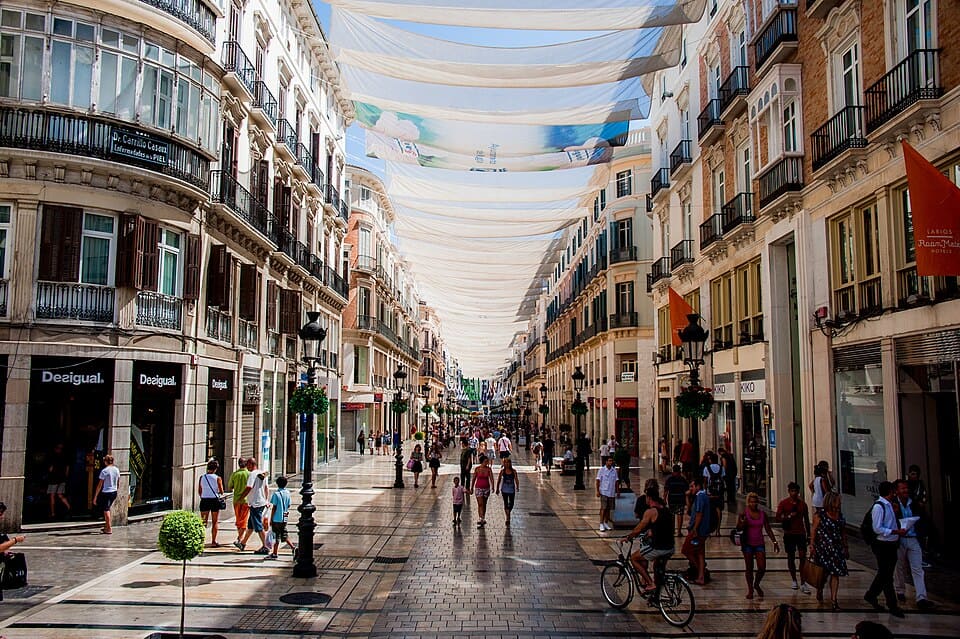
Today, Larios is much more than a shopping street. It is a meeting and strolling point for locals and visitors, the setting for events such as the Easterthe Malaga Fair or the Christmas light showThe city centre is considered one of the most impressive in Europe. Throughout the year, its atmosphere combines fashionable shops, cafés with terraces and street musicians who fill the air with melodies.
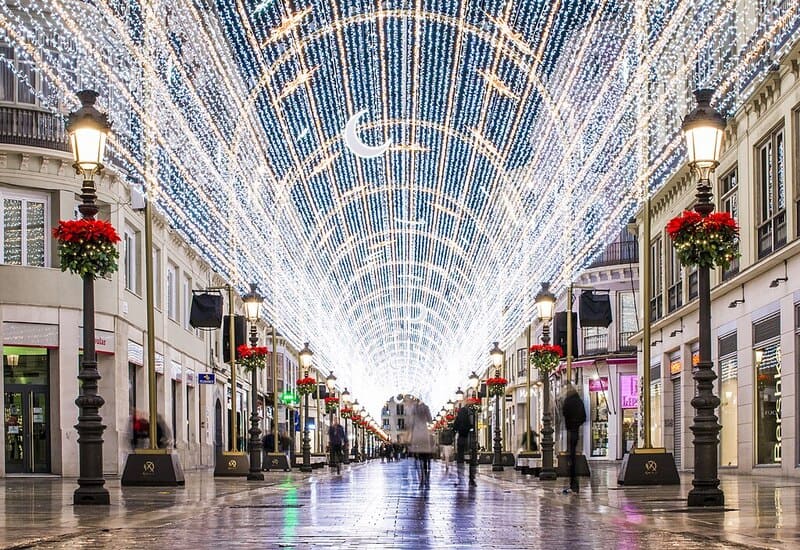
As you walk along it, it is easy to understand why Malaga makes you fall in love with it: the leisurely pace of the strollers, the stately architecture and the light filtering through the buildings create a unique atmosphere. It is worth stopping at the end of the route, where the street ends at the Plaza de la Marinato enjoy the first views of the harbour and the sea.
This brief stroll sums up the duality of Malaga: tradition and modernity, history and everyday vitality. From here, the side streets invite you to continue exploring - Calle Granada, Calle San Agustín and Calle la Compañía - where baroque churches, century-old taverns and small family-run shops are hidden away. Without a doubt, it is an essential starting point for any route through the city. what to see in Malaga in one day.
Rest in the centre. Discover Málaga Dreams.
2. Visit to Malaga Cathedral (La Manquita)
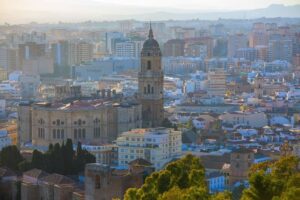
A few steps away from Calle Larios stands one of the most imposing and recognisable monuments in the city: the Cathedral of the Incarnationpopularly known as La Manquita. This affectionate nickname is due to the fact that their south tower was left unfinishedThis peculiarity has turned the cathedral into one of the most beloved symbols of the people of Malaga.
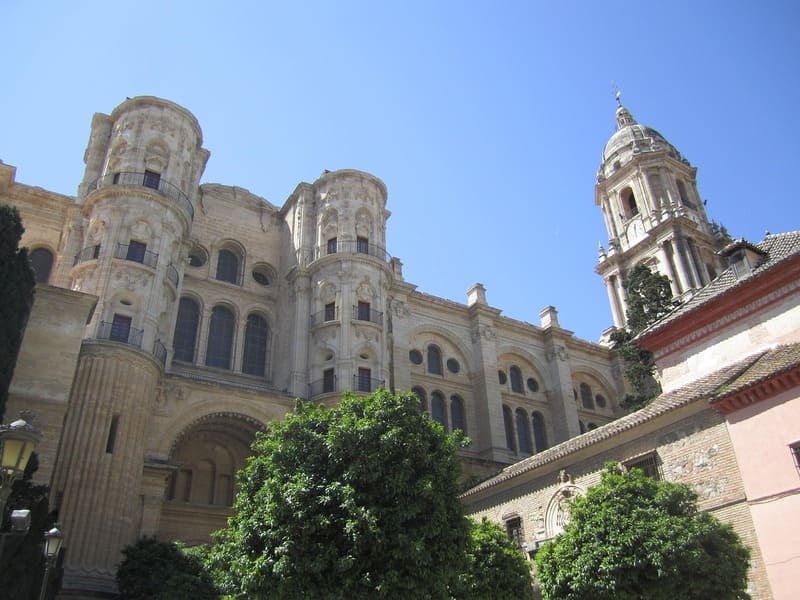
The construction of the temple began in 1528The building was built on the remains of the old aljama mosque after the Christian conquest of Malaga. The work lasted for more than two centuries, until it was completed. 1782In the meantime, the project was modified several times, resulting in a unique combination of architectural styles: late gothic, renaissance and baroque. The north tower, which reaches 84 metres highThis makes it one of the highest cathedrals in Andalusia and offers a commanding view over the old town.
The absence of the second tower, however, is what gives it its character and name. There are several theories about the causes of this interruption. The most popular one, reported by various Historical sources claim that the money destined to complete the tower was used for charitable works and to support the independence of the American colonies, especially in the United States during the 18th century. Although there are no conclusive documents, the story has permeated local tradition, and today "La Manquita" is considered an emblem of Malaga solidarity.
The interior of the cathedral is equally impressive. Highlights include its renaissance vaultthe cedar carved choirs -considered among the most beautiful in Spain- and the monumental organ 4,000 tubes, still in use today for concerts and celebrations. The visit can be completed with the ascent to the decksfrom where you get one of the best panoramic views of the citywith views of the sea, the Alcazaba and the Gibralfaro Castle.
The ideal time to visit the Cathedral is in the morning or late afternoon, when the light enhances the golden tones of the stone and the atmosphere of the surroundings - the Plaza del Obispo and the nearby terraces - invites you to sit and contemplate the main façade.
The Malaga Cathedral is not only an artistic jewel, but also a reflection of the city's identity: ambitious, luminous and with a touch of imperfection that makes it unique. A visit is an essential stop for anyone wishing to discover what to see in Malaga in one day and understand the mix of history, art and character that defines this Andalusian city.
3. Route to the Alcazaba of Malaga, the Roman Theatre and Gibralfaro Castle.
A few minutes' walk from the Cathedral begins one of the most emblematic and photogenic areas of the city: the complex formed by the Alcazaba of Malagathe Roman Theatre and, at the top of the hill, the Gibralfaro Castle. This route brings together centuries of history, from Roman times to the splendour of Andalusia, and offers some of the best panoramic views of the entire capital.
The Alcazaba of Malaga: a legacy of Andalusian splendour
As they explain Gulliver's Travelsthe Alcazaba is the most representative monument of Malaga's Muslim past. It was built in the 11th century by order of the Berber king Badis ben Habús, of the Zirid dynasty, on a hill overlooking the port and the historic centre. Its name comes from the Arabic al-qasbahwhich means "fortress", and fulfilled a double function: residence of the governors and military defence against possible attacks from the sea.
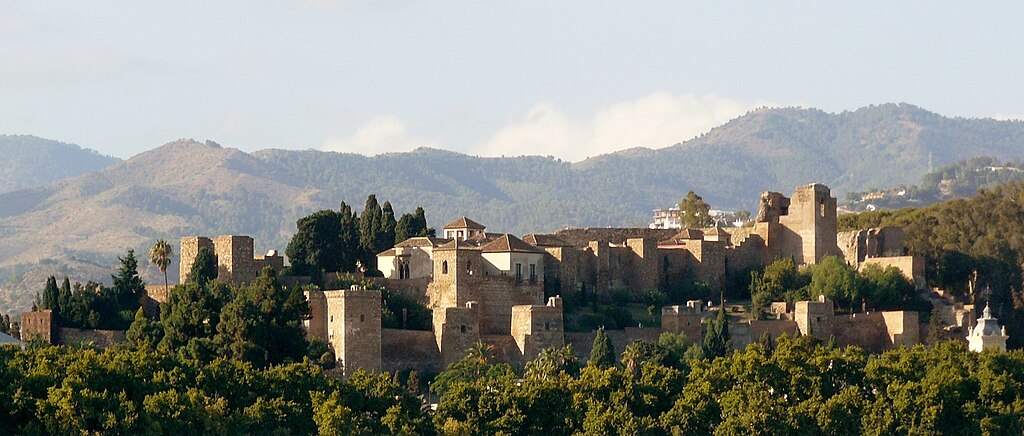
Unlike other fortresses of the period, the Alcazaba combines the defensive character with the elegance of Andalusian palatial architecture. Inside the fortress are preserved patios with pools, horseshoe archesThe castle has towers, gardens and superimposed ramparts that adapt to the relief of the hill. From the Tower of HomageFrom here, the visitor can enjoy an exceptional panoramic view over the city, the harbour and the Mediterranean Sea.
Gulliver's Travels We recommend a leisurely stroll through it, as it is a space full of artistic details and corners where the influence of Granada's Nasrid art can be perceived. In addition, the archaeological museum installed inside allows visitors to learn about the evolution of the city from antiquity to the Middle Ages.
Explore Malaga and sleep close to everything with Malaga Dreams.
The Roman Theatre: traces of ancient Malacca
At the foot of the Alcazaba is the Roman TheatreMalaga's oldest monument and direct testimony to its past under the Roman Empire. It was built in the 1st century ADIt remained in use until the 3rd century. It then fell into oblivion and part of its materials were reused centuries later to build the Alcazaba itself.
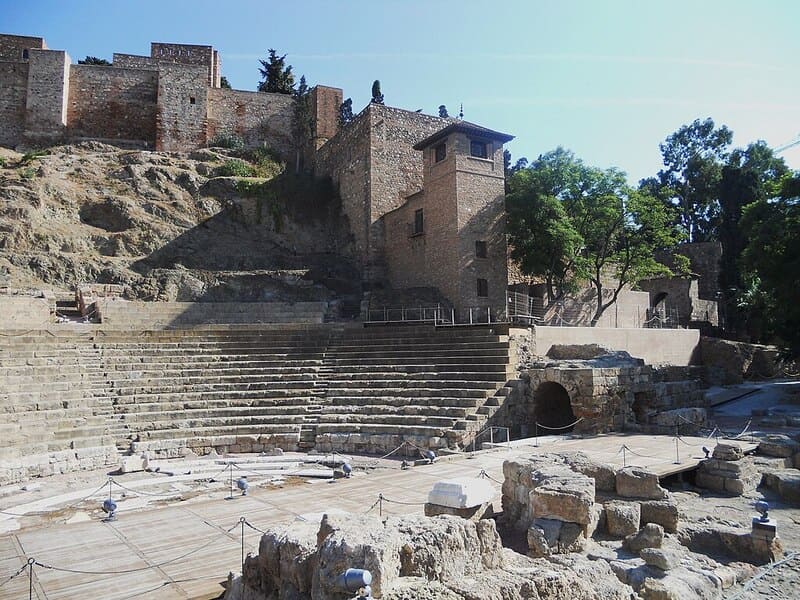
The theatre remained buried for centuries until in 1951was rediscovered by chance during construction work in the area. Since then it has become a key cultural and archaeological site, where today open-air performances are held in the summer months. Its stands, the proscaenium and the orchestra are in excellent condition, and the modern interpretation centre attached to the site offers an interactive exhibition explaining the history of the site and daily life in the ancient Malacca.
To contemplate the Alcazaba and the Roman Theatre in the same frame is, as they point out Jump with me y Gulliver's Travelsone of the most powerful images of Malaga: two superimposed civilisations that summarise the evolution of the city over more than two thousand years.
Gibralfaro Castle: unique views over Malaga and the Mediterranean Sea
For those with a little more time - or energy - the route can be continued to the Gibralfaro Castlelocated at the top of the hill of the same name, some 130 metres above sea level. The climb, although somewhat steep, offers spectacular views of the port, the bullring, the old town and the coast.
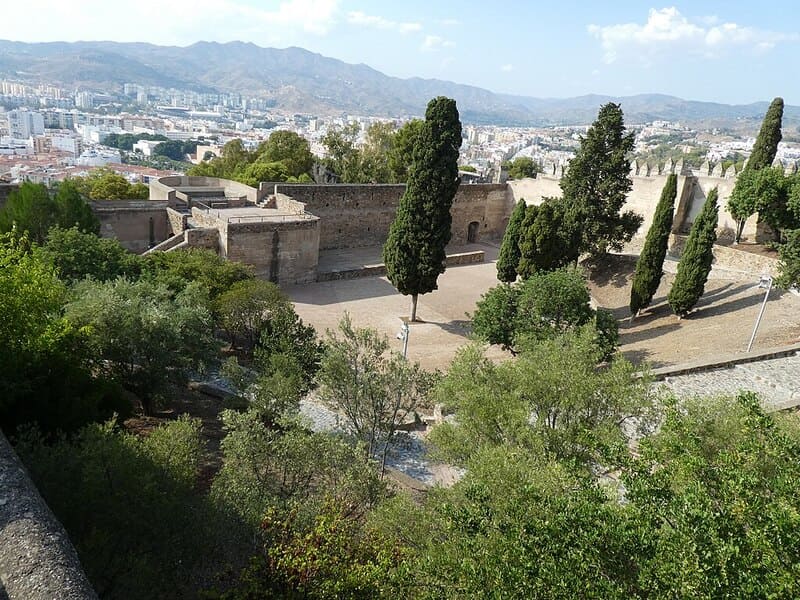
The castle was built in the 14th century by the King Yusuf I of Granada in order to reinforce the defence of the Alcazaba and to house troops and warehouses. Its name comes from the Arabic Jabal-Faruh ("mount of the lighthouse"), in reference to an ancient Phoenician tower that served as a maritime guide.
A tour of the city walls is one of the most memorable experiences in the city: the contrast between the intense blue of the Mediterranean, the urban fabric and the mountains of the interior is a postcard that is hard to forget. The small interpretation centre inside the enclosure explains the military evolution of the complex and allows you to imagine how the towers of the Alcazaba visually communicated with those of Gibralfaro.
Those who prefer to avoid the climb on foot can get there by city bus or taxi, especially in summer, when the heat can make the journey more demanding.
To go through the Alcazabathe Roman Theatre and the Gibralfaro Castle in a single morning allows you to understand the living history of Malaga: a city that has managed to integrate its Roman, Muslim and Christian past in a unique landscape facing the sea. An essential stop for any traveller who wants to discover the city's history. what to see in Malaga in one day and understand why this Andalusian city is a bridge between cultures and times.
Discover our flats in the centre with Málaga Dreams.
4. Traditional lunch or tapa: the Central Market of Atarazanas and other popular areas.
After an intense morning touring the most emblematic monuments, it's time to enjoy another of the great pleasures the city has to offer: the local gastronomy. Malaga is not only known for its history and its sea, but also for its fresh, Mediterranean cuisine, full of flavour. And there is no better place to experience this than the Central Market of Atarazanasa stop recommended by Kampaoh and by many travellers as an experience not to be missed on any route on what to see in Malaga in one day.
The Atarazanas Market: history, architecture and local flavour
The market is located in the heart of the historic centre, very close to Calle Larios, and occupies the space where in the 14th century the ancient Nasrid shipyards (hence the name, Shipyards). Its impressive marble door in Nasrid styleThe only remnant of the original building gives way to a modern 19th century building with an iron structure and a large stained glass window depicting scenes of the city.
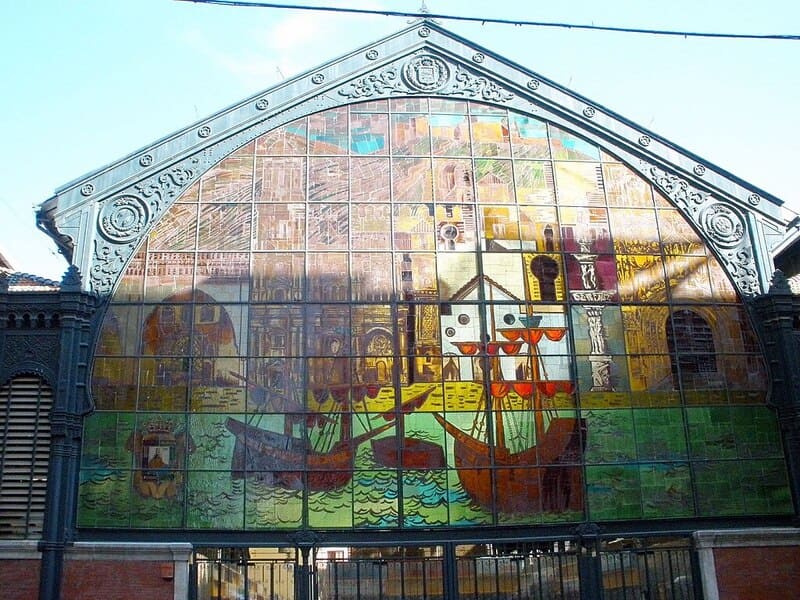
As explained in the KampaohThis market combines the historic architecture with the hustle and bustle of everyday life. The stalls sell fresh seafood - ready-to-prepare anchovies, octopus, prawns and sardine skewers, tropical fruits from the Axarquía, seasoned olives, artisan cheeses and typical sweets such as tortas locas or borrachuelos.
But the real charm of the Atarazanas Market lies in its atmosphere. It is a place where you can find neighbours shopping, cooks in search of the best food and travellers who stop to taste freshly prepared tapas in the small bars hidden among the corridors. There, standing at a bar, you can taste Malaga specialities such as the fried fishthe fine shellsthe gazpachuelo or a lid of Russian salad accompanied by a sweet local wine or a cold beer.
Kampaoh recommends visiting the market on weekday mornings, when the atmosphere is more local and the stalls are full of colour and movement. Its central location also makes it the perfect place to take a break before continuing to explore the old town.
Other popular areas for tapas in Malaga
If you prefer to enjoy a more relaxed meal, there are many options around the market. The streets Atarazanas, Nueva and Álamos The bars and taverns are some of the best known by the locals, where traditional tapas are served at reasonable prices. Also of note are the Plaza de la Merceda meeting place for young people and culture, and the Malaga Sohoa creative neighbourhood full of trendy bars, graffiti and innovative gastronomic offerings.
Another classic option is to approach the beach bars in La Malagueta to try the emblematic espeto de sardinasroasted over embers in small wooden boats by the sea. This tradition, which originated with the fishermen of the 19th century, is today one of the most authentic images of Malaga and a must for any visitor.
5. Afternoon by the sea or the port: Muelle Uno, the Malagueta Beach and the Paseo Marítimo.
After strolling through the old town and enjoying the local gastronomy, the best way to continue the day is to let the sea accompany you. Malaga faces the Mediterranean, and its relationship with the port has marked both its history and its present-day character. Few places in Spain offer such a harmonious contrast between city and sea: in just a few minutes you can go from the cobbled streets of the city centre to a modern seafront promenade full of light, art and outdoor life.
Quay One: the most modern port of the Mediterranean
The Pier One is one of the most recent and emblematic areas of Malaga's new urban profile. Inaugurated in 2011, this pedestrian area next to the port combines modern architecture, leisure, gastronomy and art in a setting open to the sea. Mad about Travel describes it as "one of the most pleasant areas for a sunset stroll", with views of the city skyline, the palm trees of the Paseo del Parque and the silhouette of the Alcazaba in the background.
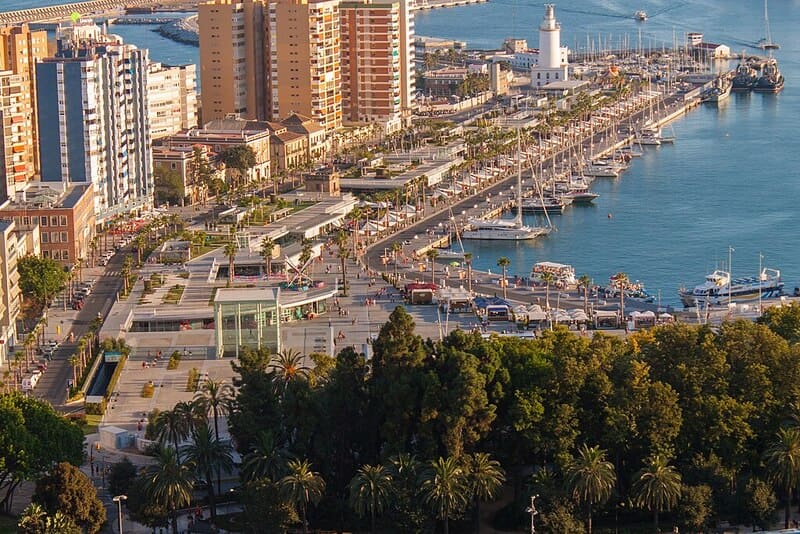
Along the promenade there are shops, restaurants and terraces where you can enjoy a drink in front of the sea. There is also the Centre Pompidou MalagaThe first international branch of the prestigious Parisian museum, whose multi-coloured cubic glass structure - the famous "Cube" - has become a contemporary icon of the city.
The atmosphere of Muelle Uno is relaxed and cosmopolitan: families, locals and tourists alike enjoy the promenade, the sound of the boats and the sun slowly falling over the port. It's a perfect place to stop, take pictures and feel the fusion of port tradition and modernity that defines the new Malaga.
Book your stay at Málaga Dreams and experience the city on foot.
La Malagueta Beach: the Mediterranean a stone's throw from the city centre
Just a ten-minute walk from Pier One is the Malagueta BeachThe most well known and frequented by the people of Malaga. It stretches over a kilometre and a half and is easily recognisable by its giant sand letters, one of the most photographed places in the city.
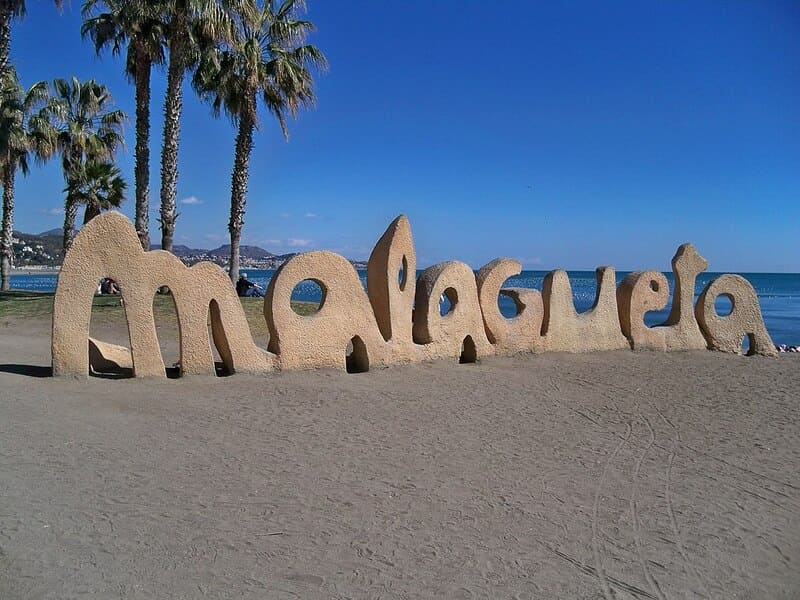
This urban beach has all the services - sunbeds, deckchairs, beach bars and play areas - making it an ideal place to relax after a morning of sightseeing. It is common to see the locals enjoying a sardine skewer or a portion of fried anchovies in one of the beach bars along the promenade, while the sun begins to descend over the horizon.
For those visiting Malaga for just one day, La Malagueta offers a complete experience without having to leave the city centre: bathing, relaxation and the Andalusian coastal atmosphere in its most genuine form.
The Pablo Ruiz Picasso Promenade: Life by the Sea
From the Malagueta, the walk can be continued along the Pablo Ruiz Picasso Promenadewhich stretches eastwards along the coast. It is one of Malaga's favourite places for walking, jogging or simply sitting and contemplating the sea. Its layout, punctuated by palm trees, benches and sculptures, sums up the relaxed and lively spirit of the city.
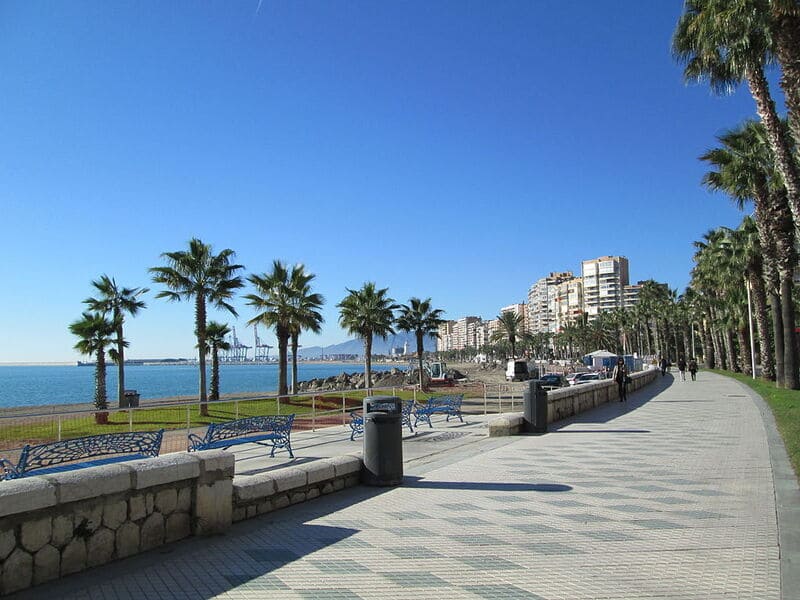
Along the route, the visitor will find numerous traditional chiringuitosThere is also a good spot to watch local life: children playing in the sand, fishermen at the end of the breakwater and couples enjoying the sunset with a glass of wine or craft beer. It is also a good spot to observe local life: children playing in the sand, fishermen at the end of the breakwater and couples enjoying the sunset with a glass of wine or a craft beer.
Mad about Travel The late afternoon, the promenade is tinged with shades of gold and pink, and the reflection of the light on the sea creates an almost magical atmosphere. It is the perfect time to take a break and enjoy the leisurely pace of Malaga life.
With the murmur of the sea in the background and the gentle breeze from the port, the afternoon in Malaga becomes a moment of disconnection and enjoyment. Whether strolling along the Pier Onerelaxing in La Malagueta or by touring the PromenadeThis part of the day shows the more serene and luminous side of the city. A perfect brooch for those looking to experience everything what to see in Malaga in one daycombining history, culture and the unmistakable charm of the Mediterranean.
Make your trip more comfortable: book with Malaga Dreams.
6. Sunset with a view: Gibralfaro viewpoint or promenade by the sea.
Few cities offer sunsets as beautiful as those in Malaga. The golden light of the sun falling over the sea, the echo of the seagulls and the pink reflection on the city walls turn this moment into an authentic Mediterranean postcard. To end the day contemplating the city from the heights of the Gibralfaro viewpoint or strolling along the seashore is an experience that perfectly sums up the serene and vital charm of Malaga.
The Gibralfaro viewpoint: Malaga's most famous panoramic viewpoint.
The viewpoint of Gibralfaro Castle is undoubtedly the most spectacular place to end the day. From the top of the hill - some 130 metres above sea level - there is a full view of the city: the port with its cruise ships and Pier One, the Plaza de Toros, the Cathedral rising between the roofs of the old town and, in the background, the Mediterranean stretching to the horizon.
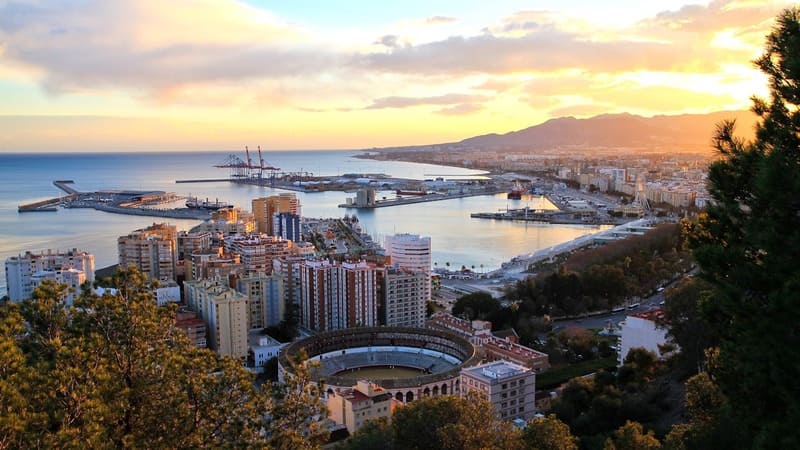
This viewpoint, located next to the castle itself, is one of the most visited places by those looking for what to see in Malaga in one day. In the late afternoon, the sun begins to descend behind the mountains that surround the city, tinting the sky with orange and violet tones. Photographers and travellers generally agree that the sunset from Gibralfaro offers one of the most beautiful urban panoramas in Andalusia.
Access is by foot, a 20-25 minute climb from the Alcazaba, or by taxi/bus if you prefer to avoid the walk. Along the way, the viewpoints in between offer equally impressive perspectives, and the Mediterranean vegetation - pines, rosemary and olive trees - add a touch of calm to the route.
From the top, the city looks like a mosaic: the warm tones of the buildings, the blue of the sea and the lights starting to come on in the port create an almost magical scene. Many travellers choose to stay until nightfall to watch Malaga gradually light up, reflecting its nightlife and welcoming character.
The promenade by the sea: the calm of the Mediterranean at sunset
If you prefer a more relaxed and friendly atmosphere, the seafront promenade is the ideal place to enjoy the sunset without going up to the lookout point. The Malagueta Beach and the Pier One are transformed in the evening into quiet spaces where locals and visitors walk, chat or simply watch the horizon while the sky turns golden.
Sitting on the sand or on one of the benches facing the sea is a simple but unforgettable way to end the day. The gentle breeze, the murmur of the waves and the smell of salt remind us that Malaga, more than an urban destination, is a city deeply linked to the sea.
The promenade also comes alive at this time: street musicians, couples enjoying the twilight and terraces preparing for dinner. It's the perfect time to make a last stop and savour a glass of muscatel wine or a light tapa while the night is drawing in over the Mediterranean.
Whether from the height of the Gibralfaro or at shore level, the Malaga sunset offers a spectacle that captures the essence of the city: its light, its harmony and its eternal connection with the sea. It is the perfect end to a day that has covered its history, its art and its daily life, making it clear why contemplating this moment is an essential part of everything we must do. what to see in Malaga in one day.
Your getaway starts here: Malaga Dreams awaits you.
7. Dinner in a local atmosphere and light evening in the historic centre.
After an intense day of sightseeing, exploring monuments, streets and viewpoints, comes the best reward: an malagueño style dinnerBetween tapas, sweet wine and good conversation. Malaga takes on a new life when night falls. Its streets light up, the terraces fill with people and the atmosphere becomes warm and cheerful, a true reflection of Andalusian hospitality.
Typical wine cellars: the gastronomic soul of Malaga
The historic centre is home to authentic gems of local gastronomy where history and tradition are served in every glass. One of the most emblematic places is the El Pimpi Winerylocated next to the Roman Theatre and the Alcazaba. Founded in the 18th century, this old Andalusian mansion preserves its original architecture with interior courtyards, barrels signed by artists and photographs that tell the story of decades of Malaga's cultural life.
The atmosphere at El Pimpi is unmistakable: the smell of muscatel wine, the bustle of diners and the music in the background create a cosy atmosphere which Mad about Travel describes it as "an experience you have to have at least once". Here you can try classics such as the ajoblancothe salmorejothe fried fish or the Iberian ham accompanied by the traditional sweet wine from Malagamade from Muscatel and Pedro Ximénez grapes.
Other historic wineries, such as Former Guard House -founded in 1840, preserves the most genuine spirit of the taverns of Malaga. With its wooden bar, barrels on view and fast, friendly service, it is the perfect place for those who want to taste local wines in an authentic, uncontrived setting.
Tapas and Andalusian atmosphere in the streets of the city centre
The streets Granada, Comedies, Beatas or the Plaza de la Merced are concentrated in dozens of bars where tapas become a small celebration. In many of them, traditional recipes coexist with modern proposals, always in portions to share and enjoy with friends.
The atmosphere is relaxed and lively. Malagueños tend to start the night with a tapa of Russian salad o flamenquínaccompanied by a glass of beer, and continue with dishes like the galician octopusthe fried anchovy or the pringá toast. Each place has its own speciality, but they all share the same essence: good produce, friendly service and a leisurely pace that invites you to stay a little longer.
If you are looking for something quieter, the Malaga Soho offers a more modern approach, with gastrobars and terraces decorated with urban art, perfect for a light dinner and a drink afterwards. On the other hand, those who prefer a more traditional setting can choose one of the inner courtyards in the old town, where the scent of jasmine and the sound of a guitar make the end of the day a complete sensory experience.
Malaga traditions and curiosities
Malaga is a city where history, popular devotion and the art of living are intertwined in a calendar full of celebrations, symbols and unique customs. Beyond its monuments and beaches, these traditions form part of its identity and help to understand the cheerful, hospitable and deeply Andalusian character of its people.
The Malaga Fair: a celebration open to the world
The Malaga Fair is, without a doubt, the most representative festival of the city and one of the most eagerly awaited of the Andalusian summer. It is held every year around 15 Augustcoinciding with the commemoration of the capture of Malaga by the Catholic Monarchs in 1487and for more than a week transforms the city into a burst of colour, music and joy.
The festival has two main stages. During the day, the historic centre comes alive: the streets are decorated with lanterns and flowers, taverns serve sweet wine and tapas, and groups of friends and families dance to the sound of sevillanas and verdiales, a traditional Malaga form of music. In the evening, the party moves to the Real de la FeriaIn the Cortijo de Torres area, where there are stalls, attractions and stages with concerts and shows for all tastes.
The Malaga Fair stands out for its openness and inclusivenessThere are no private booths as in other Andalusian fairs, which makes it a popular celebration and accessible to all visitors. It is also a magnificent opportunity to enjoy the hospitality of Malaga and get to know its festive and welcoming spirit.
The biznaga flower and other local symbols
Among the most beloved symbols of Malaga is the biznagaan emblematic flower that sums up the soul of the city. It is handmade by joining small fresh jasmine flowers on the dried stalk of a thistle, forming a white, perfumed sphere that the locals can use to decorate their homes. biznagueros -men dressed in the typical costume of the time- sell in the streets on summer evenings. Their fragrance, intense and delicate, permeates the squares and terraces of the historic centre, evoking the essence of Malaga's summer.
The biznaga is not only a flower ornament: it represents the ephemeral beauty, ingenuity and a love of simple detailsvalues that are very present in the local culture. For this reason, even the Golden Biznaga Award of the Malaga Film Festival takes its name from this flower, a symbol of identity and pride of the city.
Along with the biznaga, other everyday elements reflect the character of Malaga: the glazed ceramics of blue and green tones that decorate courtyards and fountains, the traditional cuisine based on seafood products - such as anchovies, a gastronomic symbol and affectionate nickname for the inhabitants of Malaga -, or sweet wines made from Muscatel and Pedro Ximénez grapes, the legacy of centuries of wine-making tradition.
Architectural curiosities: living history in stone
Malaga is also a city of architectural contrasts, where every era has left its mark. An emblematic example is the Cathedral of the Incarnationbetter known as La ManquitaThe building has an unfinished south tower. This peculiarity, far from detracting from its beauty, gives it a special charm and has become an inseparable part of its identity.
The Alcazaba and the Roman TheatreThe theatre, located next to each other, is another example of the overlapping of cultures. The theatre, built in the 1st century under the Roman Empire, remained hidden for centuries until it was rediscovered in the 20th century. The Alcazaba, built in the 11th century by the Muslims, reused part of its materials, reflecting the historical continuity of the city. Together, the two structures form a unique testimony to the city's cultural fusion between Rome and Al-Andalusvisible and tangible in the heart of the city centre.
These contrasts, far from fragmenting the cityscape, are precisely what make Malaga a city with individualitywhere the past and the present are in dialogue at every step.
Explore Malaga and sleep close to everything with Malaga Dreams.
Calle Larios at Christmas and other highlights
The Marqués de Larios StreetThe city's commercial and pedestrian heart is transformed into a real spectacle during the Christmas holidays. Every year, its illumination is renewed with a different artistic design, combining synchronised lights with music in a show that attracts thousands of visitors. This internationally renowned event makes Malaga one of the most visited destinations in Europe during the Christmas season.
The festive atmosphere spreads throughout the historic centre: traditional nativity scenes, craft markets and open-air concerts fill the city with life. But the magic of Calle Larios is not limited to Christmas. During the EasterThe balconies are decked out for the processions, and in the summerThe fair, which hosts parades, cultural events and the inauguration of the Fair.
At any time of the year, a stroll along this street sums up the spirit of Malaga: elegant, bright and friendly. A city that celebrates its traditions while looking to the future, and where every fiesta, every flower and every corner tells a story that deserves to be lived.
Practical tips for enjoying Malaga in a day
Visiting Malaga in a single day is an intense experience but one that is fully possible if planned well. Its compact size and welcoming atmosphere make it a comfortable and pleasant place to visit, as long as you follow some basic tips to make the most of your time and energy.
Transport and getting around: the city is best enjoyed on foot
The centre of Malaga is totally pedestrian and easy to get around on foot. Most of the essential places - Cathedral, Alcazaba, Roman Theatre, Picasso Museum, Calle Larios, Muelle Uno - are just a few minutes away from each other. Walking is also the best way to experience the essence of the city: its aromas, its rhythm and its light.
For longer journeys or to get on the Gibralfaro Castlethe city bus (line 35) is a good option, as are the taxis or VTCwhich operate quickly throughout the city centre. If you arrive in the city by train (María Zambrano Station) or by cruise ship (Port of Málaga), you can easily reach the historic centre in less than 15 minutes.
Timetables and tickets: plan your visits in advance
Some of the main monuments of Malaga, such as the Cathedral or the AlcazabaThe opening hours may vary depending on the season. It is therefore advisable to consult them and buy tickets in advanceespecially at weekends or during the summer months.
- Malaga Cathedral: open from Monday to Saturday, with access to the temple and the roofs (panoramic view of the city).
- Alcazaba and Roman Theatre: joint ticket available; the visit is more pleasant in the morning or late afternoon.
- Gibralfaro Castle: access by footpath or transport, ideal for sunset.
Buying tickets online will allow you to avoiding queues and better time management.
Clothing, footwear and basic recommendations
Malaga's climate is one of its greatest attractions, but it also requires a certain amount of preparation. It is recommended to bring lightweight and breathable clothing for most of the year, as well as comfortable footwearThe route is mostly on cobbled or sloping streets.
In the warmer months, it is important to protecting yourself from the sun with a cap, sunglasses and sunscreen, as well as wearing a reusable water bottlewhich can be easily refilled at public fountains. In winter, a light jacket is enough: temperatures rarely drop below 12°C.
Best time to visit each site and avoid crowds
- Morning (8:30 - 13:00): ideal for the historic centre, the Cathedral and the Alcazaba, before the tour groups arrive.
- Noon: perfect time for a gastronomic break in the Atarazanas Market or on a terrace in the city centre.
- Afternoon (16:00 - 19:00): a relaxed stroll along Muelle Uno or Malagueta Beach.
- Sunset: views from the Gibralfaro viewpoint or promenade by the sea.
If you want to enjoy a quieter Malaga, avoid the central hours of the day in summer and reserve cultural visits for the early morning or late afternoon.
Where to stay: the value of being in the heart of the city
For those who plan to spend one or several nights, staying in the historic centre is the best decision. It allows you to get around on foot, make the most of every minute and live the local experience from the inside, without relying on transport.
The Málaga Dreams flatslocated in the heart of the city, they offer the perfect balance between comfort, location and style. They are ideal for both couples and individual travellers who want to feel at home, with the freedom to explore the main attractions just a few steps away.
In just one day, Malaga reveals its essence: a city where Roman history coexists with the echoes of Al-Andalus, where contemporary art dialogues with classical architecture, and where the Mediterranean sets the pace of life. From the light that envelops Calle Larios to the sound of the waves in the Malagueta, every corner transmits a perfect blend of culture, joy and sea.
But Malaga does not run out in twenty-four hours. Imagine coming back another day to explore its white villages, visit the vineyards of the Axarquia or explore natural spots such as the Caminito del Rey or the mountains surrounding the city. Each return offers a new perspective, a new detail to discover.
Because Malaga is not only visited: it is felt, walked and kept forever in memory.
Stay at Malaga Dreams and feel at home.