
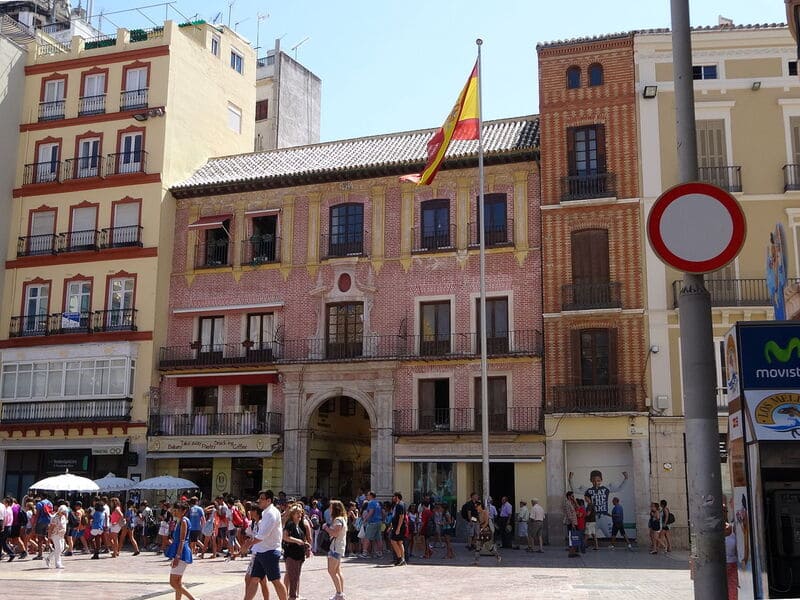
The Plaza de la Constitución is much more than a public space: it has been the true nerve centre of Malaga for more than five centuries. Located in the heart of the historic centre and directly connected to Calle Larios, this square is a must for those who wish to understand the urban, social and political evolution of the city.
Origins and historical development
From medieval square to institutional core
During the Muslim period, this space was already the site of urban activity. However, after the Catholic Monarchs took Malaga in 1487, it began to be organised as a main square, initially receiving the name of "Plaza de las Cuatro Calles" (Square of the Four Streets), as the city's main thoroughfares converged here.
Since then, it has been the seat of the main administrative bodies: the old Town Hall, the prison, the Audiencia, the Casa del Corregidor and also the convent of the Agustinas Descalzas. This concentration of public functions made it an authentic centre of power and civic life.
Name changes over the centuries
In 1812, with the approval of the first Spanish Constitution, it was officially renamed as Constitution SquareThe name symbolised the liberal spirit of the time. Throughout the 20th century, however, its name changed several times for political reasons, such as "Plaza de la Libertad", "14 de abril" during the Second Republic, or "José Antonio" during the Franco regime. After the transition to democracy, it recovered its current name, in homage to the 1978 Constitution.
Urban modernisation: from the 19th to the 21st century
During the 19th century, following the disentailment of church property, several religious buildings were demolished and new passages were opened, such as the Heredia Passage (1837) and the emblematic Chinitas PassageThe square was connected to other key areas of the town centre.
In 2002, the square was completely pedestrianised, which meant a significant improvement in mobility and in the quality of the public space. In 2004, several metal plaques were added to the pavement with reproductions of the front pages of national newspapers on 6 December 1978, commemorating the approval of the current Spanish Constitution.
Rent your flat in MÁLAGA Dreams and visit Plaza de la Constitución on foot
Architectural heritage and highlights
Genoa Fountain
One of the most representative features of the square is the Genoa FountainA white marble fountain in Renaissance style, attributed to Genoese workshops in the 16th century. It was installed in the square in the 19th century and restored in 2016. Today it is located slightly out of the centre to allow the square to be used as a scenic and meeting space.
Consulate House
On the north side of the square stands the Consulate HouseThis baroque building, built in 1785, once housed the Consulate of the Sea. It is currently the headquarters of the Sociedad Económica de Amigos del País, a cultural institution of great historical and social importance.
Other unique buildings
Around the square there are several façades of historical and architectural interest, such as the old Colegio de San Sebastián, the Montepío de Viñeros (no. 7), and residential buildings with balconies and clocks that preserve the nineteenth-century style.
The centre of Malaga's urban life
Daily meeting point
The Plaza de la Constitución is one of the liveliest and most visited places in Malaga. With a large pedestrian area, trees providing shade and benches for resting, it is a popular place for locals and tourists alike.
Civic events, demonstrations, concerts, street musicians, temporary exhibitions and open-air cultural activities are common.
Epicentre of festive events
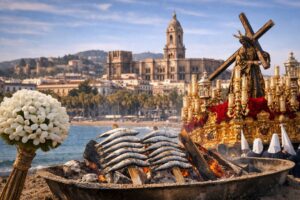
The square takes centre stage during the city's main festivities. At Easteris one of the most coveted spots to see the processions. At New Year's Evethousands of people gather to celebrate the chimes. During the Malaga Fairis filled with decorations, music and shows. It is also the scene of the lighting of the Christmas lights and Carnival activities, among other events.
Your flat rental in MÁLAGA Dreams, just a stone's throw from the Plaza de la Constitución.
Tourist and cultural activities
Guided tours and cultural routes
The Plaza de la Constitución is part of the guided routes through the historic centre. Its proximity to the Cathedral, Calle Larios, the Carmen Thyssen Museum, the Picasso Museum and the Roman Theatre makes it an essential stop.
Many of these tours explain the urban development of the city from the Muslim period to the present day, with special attention to the monuments and architectural details surrounding the square.
Leisure and gastronomy
The area around the square has a wide range of bars, cafés and restaurants. Among them is the restaurant Beluga MalagaThe restaurant combines signature cuisine with local ingredients and a privileged setting. The terraces that open onto the square allow you to enjoy a meal or a drink with views of the hustle and bustle of Malaga.
Cultural relevance and collective symbol
The Plaza de la Constitución is not only a physical space, but also a symbol of Malaga's political and social history. From the time of the Catholic Monarchs to the present day, it has reflected the social changes, the rise of liberalism, the conflicts of the 20th century and the rebirth of the city as the cultural and tourist capital of southern Europe.
The steel plates with newspaper front pages from 1978 not only commemorate the Spanish Constitution, but also invite us to reflect on the role of democracy in recent history.
Conservation and current challenges
One of the current challenges of this space is the balance between its tourist and civic use. The high number of visitors and intensive use during events can lead to wear and tear on the street furniture and paving. However, municipal planning has managed to preserve the open and functional character of the site, relying on resistant materials and effective regulation.
MÁLAGA Dreams: flat rentals to discover the historic city centre
Monuments and historical sites near Constitution Square
The Plaza de la Constitución is an excellent starting point for exploring the historic centre of Malaga. Some of the city's most important monuments and museums are concentrated within a few minutes' walk.
Marqués de Larios Street
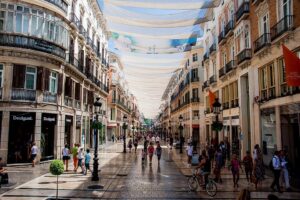
The square marks the end of the emblematic Larios Streetone of the most elegant commercial arteries in Spain, inaugurated in the 19th century and the centre of events such as Easter Week, the Malaga Fair and the switching on of the Christmas lights.
Malaga Cathedral ("La Manquita")
A few minutes' walk away is the Cathedral of the Incarnationknown as "La Manquita" because of its unfinished tower. It is one of the great symbols of the city, with a mixture of Renaissance and Baroque styles and an imposing presence over the historic centre.
Church of Santo Cristo de la Salud and the Malaga Athenaeum
On one side of the square there is the Santo Cristo de la Salud ChurchThe church is a baroque temple from the 17th century. Nearby, in Calle Compañía, there is a historic building that was once a school and is now the headquarters of the Malaga AthenaeumThe project is a cultural institution of reference.
Museo Carmen Thyssen Málaga
Less than a five-minute walk down Calle Compañía will take you to the Museo Carmen Thyssen MálagaIt is housed in the Palacio de Villalón, a 16th century building. Its collection covers 19th century Spanish painting, with a special focus on Andalusian genre painting.
Roman Theatre, Alcazaba and Gibralfaro Castle
From the square, walking along Granada and Alcazabilla streets, you can easily access the complex formed by the Roman Theatrethe Alcazaba and, somewhat higher up, the Gibralfaro CastleThe castle is one of the most important monuments in the city. It is one of the essential monumental routes to understand Roman and Islamic Malaga.
Other points of interest nearby
In the streets surrounding the square you will also find spaces such as the Museum of Glass and CrystalThe small historic churches, urban palaces converted into cultural venues and numerous squares and narrow streets with terraces and traditional shops make this area the real social and cultural heart of Malaga.
Book your stay at Malaga Dreams and enjoy the city from the centre.
How to get to the Plaza de la Constitución
The Plaza de la Constitución is located in the heart of the historic centre of Malaga. It is the point where Marqués de Larios Street ends and one of the busiest pedestrian routes in the city, very close to the Cathedral and Granada Street.
On foot from the historic centre
If you are already in the centre, almost all routes will take you here. From the Alameda Principal or the port area just follow Calle Marqués de Larios in a northerly direction; in about 5-10 minutes you will arrive directly at the square.
By metro and commuter trains
The most practical stations are Shipyards (metre L1/L2) and Malaga-Alameda Centre (Cercanías C1 and C2). Both are a 5-10 minute walk from the Plaza de la Constitución, following a completely urban and pedestrian route through the Alameda and the area around Larios.
By city bus
Several EMT lines connect the area with the rest of the city. The lines that stop in the Alameda Principal (such as 3 and 11) are just a few minutes' walk from the square; just cross over to Calle Marqués de Larios and continue straight ahead into the heart of the old town.
By car and parking
The immediate surroundings are pedestrianised, so the most convenient option is to leave your car in one of the nearby car parks, such as Parking Plaza de la Marina o Alcazaba car parkand you can walk there in just a few minutes.
Tips for visitors
If you are visiting the Plaza de la Constitución, here are some useful tips:
- 🕰️ Visit early in the morning to enjoy it without the crowds, or in the afternoon-evening to feel the local atmosphere.
- Don't miss the commemorative plaques on the floor and the marble fountain.
- 🍽️ Taste the gastronomy on the terraces or in the nearby restaurants.
- 🎭 Check the cultural agenda: there may be an event during your visit.
- Combine it with visits to Calle Larios, the Cathedral, the Carmen Thyssen Museum or the Roman Theatre.
Conclusion
The Constitution Square is much more than a square: it is the synthesis of the history, power, culture and life of Malaga. From its medieval origins to its current role as a civic, commercial and cultural space, it has been able to adapt to change without losing its essence. To visit it is to understand Malaga, to feel its pulse and to form part - if only for a few hours - of a shared history that continues to be written every day.
Explore more corners of Malaga
If you want more inspiration for your trip, here are some other guides that combine very well with any plan for Malaga:
A complete tour to get the most out of Malaga in one dayA simple route to see the essentials of the historic centre without rushing, with cultural stops and moments to enjoy the atmosphere.
The best-known walk to get a feel for the cityPerfect for walking along the centre's axis, seeing its more elegant side and understanding why so many plans are concentrated here.
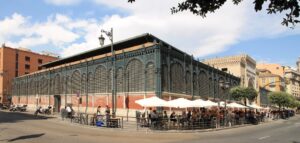
A gastronomic plan with a local essenceIdeal for discovering fresh produce, experiencing the hustle and bustle of the market and taking a break with a Malaga flavour.
Culture without spending: museums and exhibitionsPractical options for adding cultural visits to your route, ideal if you want to alternate indoor and outdoor plans.
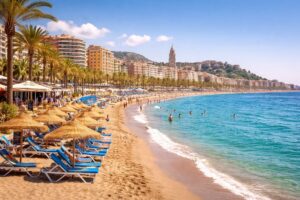
A wide beach for an uncomplicated day at seaGood plan if you are looking for space, promenade and a comfortable experience in the city.
A square with history and a real atmospherePerfect to stop, have a drink and feel the rhythm of the city centre at any time of the day.
A must-see viewpoint to see Malaga from aboveIdeal if you fancy a powerful panoramic view and a moment of light that will stay in your memory.
The aromatic symbol that defines summer in MalagaDiscover the biznaga, its history and how to experience it during an evening stroll through the centre.
A trip to Roman Malaga in the heart of the city centreA short but very revealing visit to understand the historical footprint of the city.
The most practical guide to choosing your ideal beachUrban, coves or sandy beaches with atmosphere: clear options to organise several days at sea without complications.